
When most people first start researching a hair transplant, one question comes up almost immediately: what is the difference between FUE and FUT?
At first glance, they can seem like two versions of the same treatment. Both are designed to move healthy hair follicles from one part of the scalp to another. Both can produce natural-looking results. And both are widely used in modern hair restoration. But once you look a little closer, the difference between them matters more than most people think.
If you are trying to make sense of FUE vs FUT hair transplant options, the best place to start is not with hype, trends, or online opinions. It is with the actual experience of each procedure and how it fits your hair loss, your lifestyle, and your expectations.
What Does FUE Actually Mean?
FUE hair transplant stands for Follicular Unit Extraction.
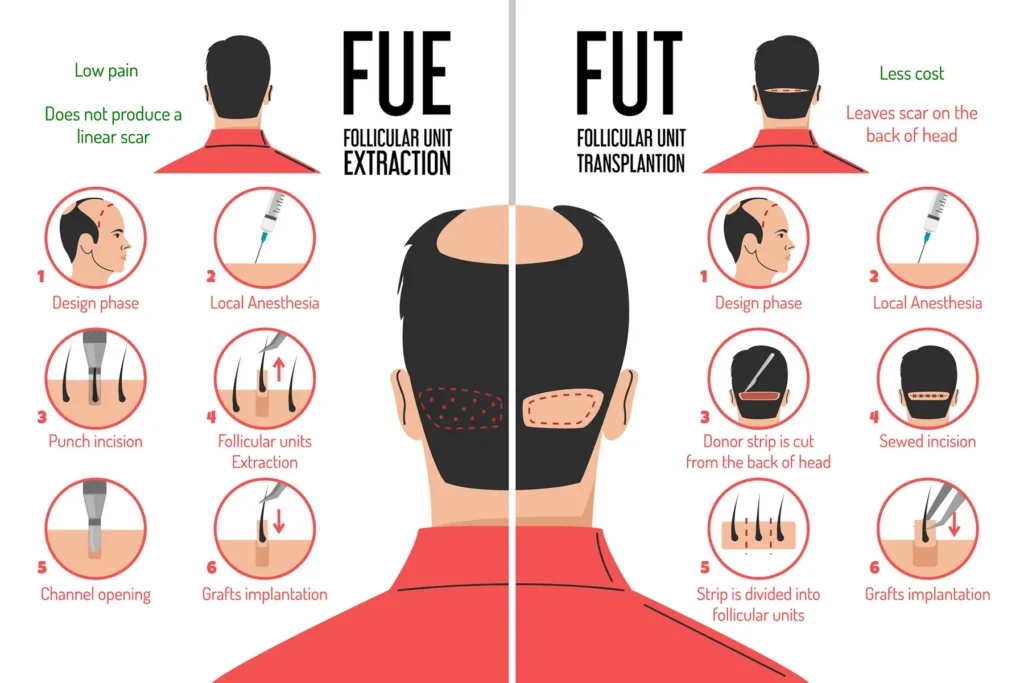
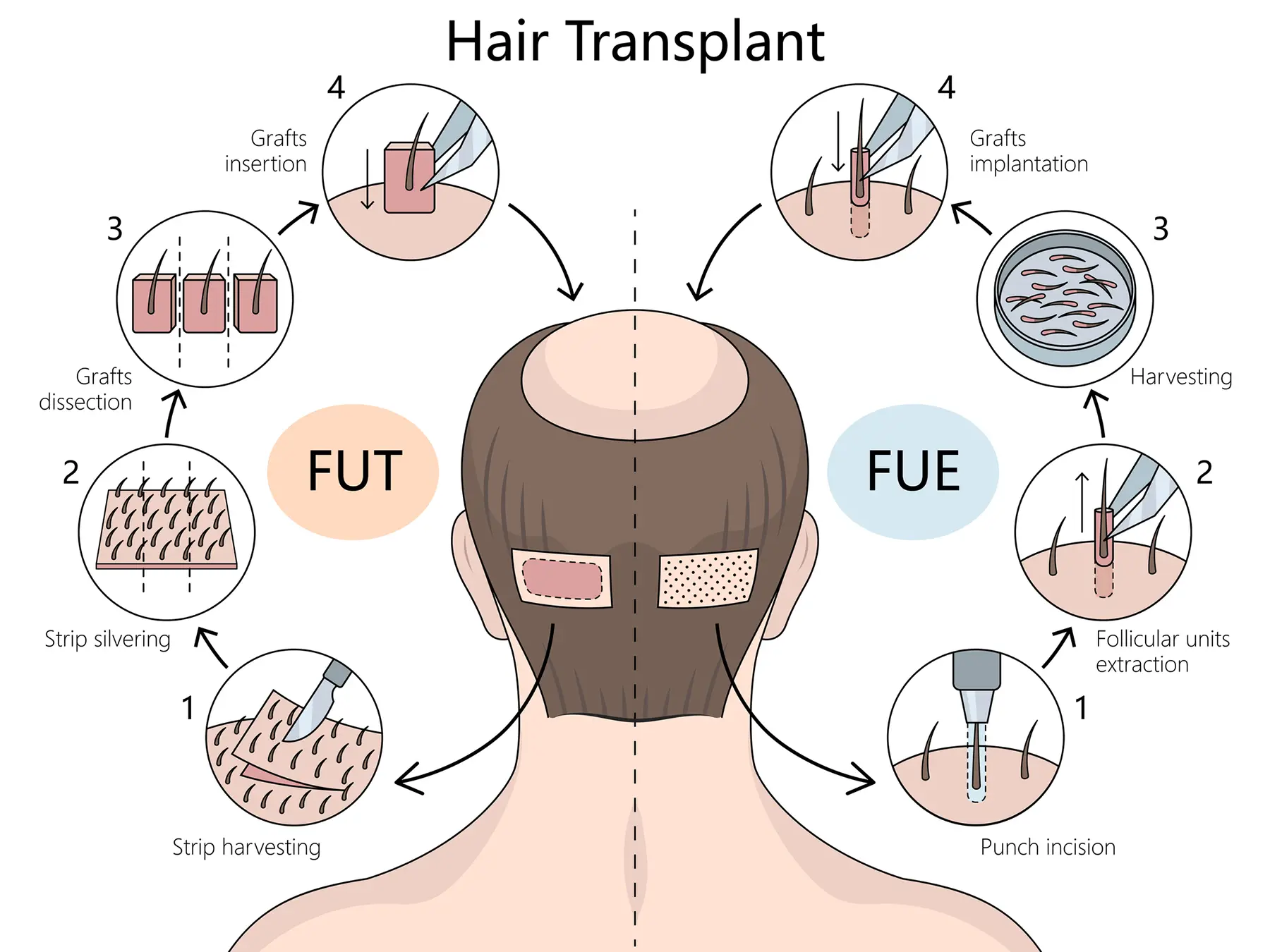
In simple terms, this method involves removing individual hair follicles one by one from the donor area, which is usually the back or sides of the head, and placing them into the thinning or balding areas. Because the follicles are extracted individually, there is no large strip of scalp removed.
This is one reason FUE has become so popular. People like the idea of a less invasive approach and the flexibility that often comes with it. If someone wants shorter hair after their transplant, FUE is often the method they ask about first because the tiny extraction points are far less noticeable than a long linear scar.
For many patients, FUE also feels easier to understand. The concept is straightforward, and during a personalised consultation, it is usually the treatment people already have in mind before they hear the full comparison.
What Does FUT Mean?
FUT hair transplant stands for Follicular Unit Transplantation.
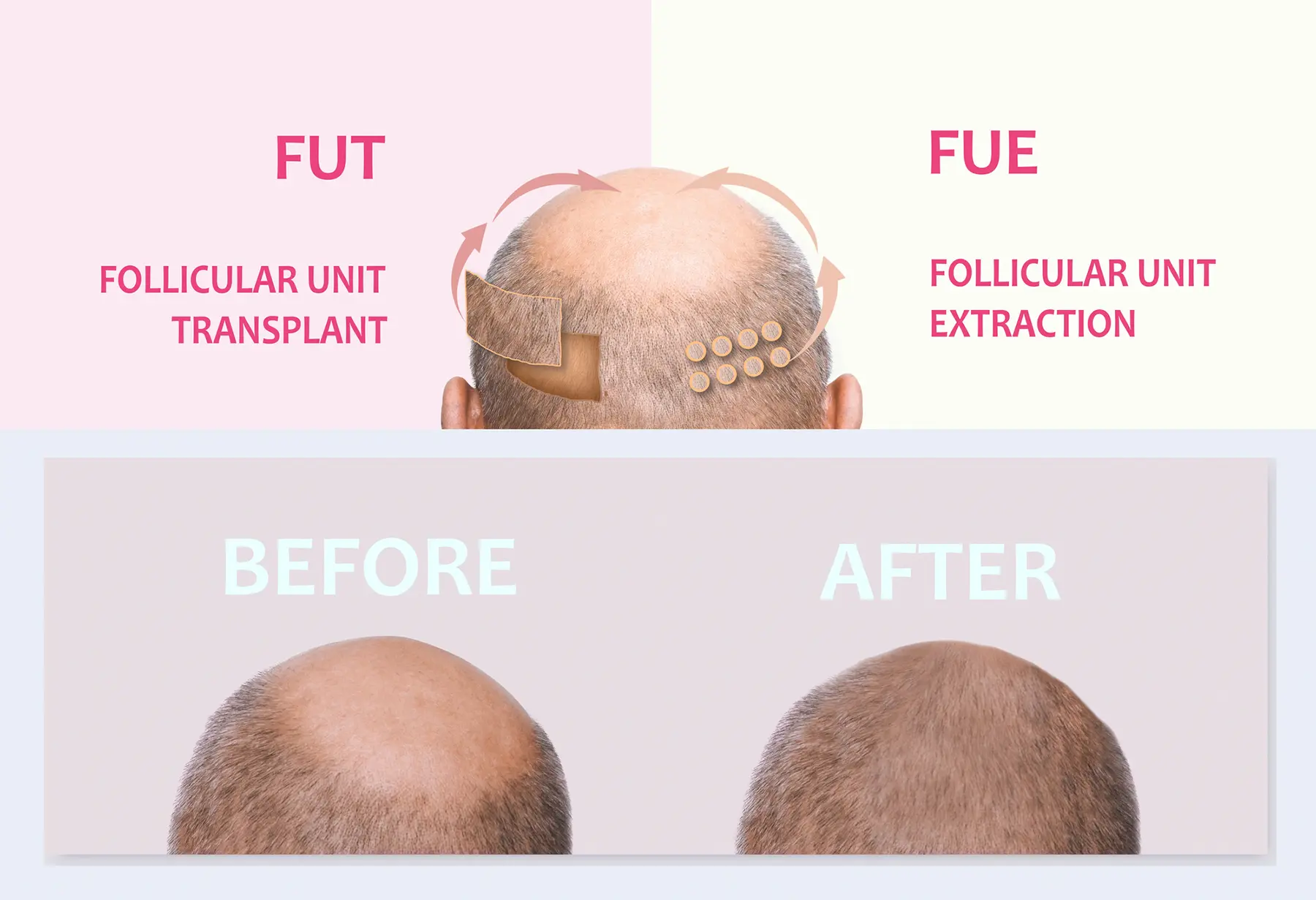
This method is often called the strip method. Instead of taking follicles out one by one, a thin strip of scalp is removed from the donor area. That strip is then carefully divided into grafts, and those grafts are transplanted into the areas where hair is needed.
Because of that process, FUT usually leaves a narrow scar in the donor area. For some people, that is not a major issue, especially if they plan to keep their hair longer at the back and sides. For others, it is a dealbreaker.
Still, FUT should not be dismissed as old-fashioned or inferior. It is still one of the most established hair transplant methods, and in the right case, it can be very effective.
The Main Difference Between FUE and FUT
The easiest way to understand FUE vs FUT hair transplant is this: both aim for the same result, but they differ in how grafts are collected.
With FUE, grafts are removed individually.
With FUT, a strip is removed first and the grafts are then separated from it.
That one difference affects almost everything else, including scarring, healing time, recovery, and even which patients are better suited to each option.
This is why the choice should never be based only on what sounds newer or more advanced. It should be based on what actually works best for your situation.
Scarring: The Difference Most People Care About First
For a lot of people, the scar is the first real deciding factor.
With FUE hair transplant, the donor area is left with tiny dot-like marks that usually blend in well once the hair grows back. They are much less obvious, especially if the procedure is done well and the donor area is managed properly.
With FUT hair transplant, there is typically one thin linear scar where the strip was taken. Some people are perfectly fine with that. Others know from the start that they want the freedom to wear their hair short, and that makes FUE the better fit.
If appearance during healing matters a lot to you, this is one of the biggest parts of the decision.
Recovery and Downtime
This is where many people start leaning more clearly one way or the other.
FUE is usually associated with a gentler recovery. Because there is no strip removal or stitches, people often feel more comfortable in the days after treatment. There is still healing, of course, but the recovery can feel more manageable.
FUT can involve more tightness or soreness in the donor area because of the strip method. That does not mean it is unbearable. It just means recovery can feel a bit more noticeable.
This is also where proper aftercare makes a huge difference. Hair Again puts a strong emphasis on post-care support, and that matters more than people sometimes realise. A hair transplant is not only about the day of the procedure. It is also about what happens in the days and weeks after it.
Graft Numbers and Coverage
Now we get into the part that is less visible but just as important.
In some cases, FUT may allow a clinic to collect a larger number of grafts in one session. That can make it appealing for people with more extensive hair loss or those looking for higher coverage in a single go.
FUE can also deliver excellent coverage, but depending on the donor area and the number of grafts needed, the approach may need to be more carefully planned.
This is why the answer to FUE vs FUT hair transplant is rarely one-size-fits-all. Someone with early thinning at the hairline may suit FUE beautifully. Someone with more advanced hair loss may be told FUT offers practical advantages. The right option depends on the pattern of loss, the donor supply, and the long-term plan.
Comfort During the Procedure
A lot of patients worry about whether one option is more painful than the other.
In reality, both procedures are done under local anaesthetic, so the procedure itself is generally very manageable. Most people describe the day as far less dramatic than they expected.
The bigger difference is how the scalp feels afterward. FUE often feels lighter during recovery. FUT can involve more tenderness due to the strip and stitches. That said, both are well-known hair transplant methods, and both are routinely carried out for patients who simply want a natural result and a straightforward experience.
If comfort is one of your top concerns, talk through it honestly before treatment rather than relying on random forum comments.
Which One Looks More Natural?
This is one of the biggest myths in the industry.
People often assume that one method automatically looks better than the other. That is not really how it works.
The naturalness of the result depends far more on planning, graft placement, hairline design, and the skill of the medical team than on whether the grafts came from FUE or FUT. A poorly designed transplant can look unnatural regardless of the method. A well-executed transplant can look excellent with either one.
That is why it helps to look beyond the labels and spend time reviewing success stories from real patients. The method matters, but execution matters even more.
Why FUE Has Become So Popular
There is a reason so many people ask about FUE first.
It is discreet. It usually offers easier healing. It suits people who want to keep their options open with short hairstyles. It also feels modern and approachable, which matters when someone is already nervous about treatment.
For people who are still early in their research, FUE often sounds like the less intimidating route. And in many cases, it is exactly the right one.
That said, popularity should never replace suitability. The fact that FUE is more talked about does not automatically mean FUT has no place.
Why FUT Still Makes Sense for Some Patients
FUT tends to get overlooked because FUE gets more attention online, but that does not mean it is outdated or wrong.
For some patients, FUT remains a very practical hair restoration procedure, especially when graft yield is a major priority. If someone is not concerned about wearing their hair very short, and if their surgeon believes strip harvesting offers an advantage, FUT can still be a smart option.
This is where honest advice matters. A good clinic will not push one method simply because it is easier to sell. They will explain why one approach makes more sense for your case than the other.
That kind of clarity is exactly what people are looking for when they compare treatment options, review pricing, and try to decide whether now is the right time to move forward.
So Which One Should You Choose?
If you want the most honest answer, here it is: choose the option that fits your hair, not the one with the better marketing.
If you care most about minimal visible scarring and a shorter recovery, FUE may be the better route.
If you need a high number of grafts and you are comfortable with the idea of a linear scar, FUT may still be worth considering.
The best choice depends on your donor area, the extent of your hair loss, your preferred hairstyle, and your long-term expectations. That is why a proper assessment matters so much. A good conversation, realistic planning, and clear answers will always be more valuable than trying to guess from surface-level comparisons. Even a detailed FAQ page can only take you so far before a real consultation becomes necessary.
Final Thoughts
The conversation around FUE vs FUT hair transplant often gets oversimplified online. One side gets called modern, the other gets called outdated, and suddenly people feel pressured to choose based on image instead of suitability.
The truth is more balanced than that.
Both methods can work. Both can produce strong, natural results. And both have a place in modern hair restoration. What matters most is not choosing the method with the loudest reputation. It is choosing the method that makes sense for your hair, your goals, and the kind of recovery you are comfortable with.
When you look at it that way, the decision becomes a lot clearer.
FAQs
Is FUE better than FUT for everyone?
No. FUE vs FUT hair transplant depends on the individual. FUE is often preferred for less visible scarring and easier recovery, while FUT may suit people who need a larger number of grafts.
Does FUT always leave a scar?
Yes, FUT usually leaves a linear scar in the donor area. For some people that is not a major concern, especially if they keep their hair longer.
Is FUE less painful than FUT?
Both procedures are done under local anaesthetic, but FUE is often described as more comfortable during recovery because there are no stitches in the donor area.
Which method gives more natural-looking results?
Both can look very natural when planned and performed properly. Technique alone does not decide the final look.
How do I know which option is right for me?
The best way is to speak with a specialist who can assess your hair loss, donor area, and goals before recommending the right approach.
